
Disclaimer: This article shares personal travel experiences and family stories for informational and inspirational purposes only. It does not provide legal, financial, immigration, or genealogical advice. Readers should always consult official sources and professionals for decisions about travel or family history research.
Introduction – A Chance Meeting With the Gessolini Family
On a slow regional train rolling through Emilia-Romagna on the Italian railway network, a traveler decided on a spontaneous detour that would change the way they thought about Italian family heritage.
That last-minute choice led them to the Gessolini family in a corner of small Italian village life, where one evening at a long wooden table turned into a window on belonging, memory, and what it means to carry stories across time.
From the outside, it could be described as simple narrative non fiction travel a quiet detour from Bologna into the foothills, meeting locals while traveling, and accepting an invitation many tourists might have politely declined.
But inside the house that night, the visitor stepped into a living archive: a multi generational family sharing food, faith, and storytelling across generations in ways no guidebook could capture.
For readers who are curious about their own roots, especially in places like the United States where interest in Italian ancestry keeps growing, this story offers more than a postcard moment.
It offers practical inspiration: how to notice rural Italy traditions, how to recognize the value of oral family history, and how to start preserving family stories and learning about ancestors in any culture whether your relatives live in a hill town, a suburb, or an apartment block.
The Setting – Small Italian Village Life in Emilia-Romagna
From Bologna to a Hill Town in the Apennine Mountains
The journey began in Bologna, where the traveler boarded a small regional train heading toward the Apennine Mountains.
As the city slipped away, the view turned into rolling hills, vineyards, and clusters of stone houses. Through the window, they watched everyday life in Italy unfold—farmers tending fields, elderly couples strolling near the tracks, and schoolkids racing bicycles home.
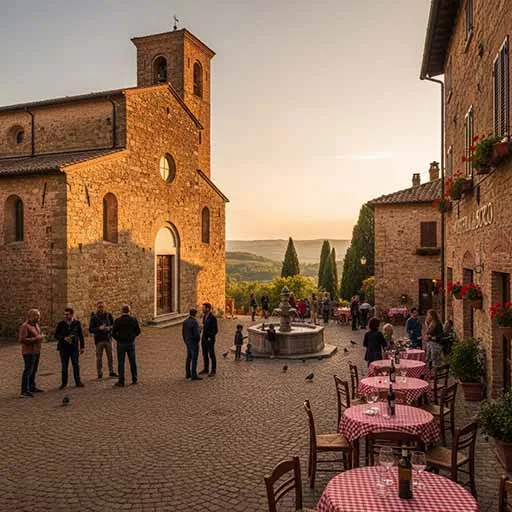
At a sleepy station, the train slowed to a halt. From there, the traveler walked along a narrow road into the village, following signs toward the Piazza. The square was a simple triangle of cobblestones framed by a bar, a tiny Trattoria, and the façade of the town church.
Children buzzed around the edges on a shared Vespa scooter, dodging benches and grandparents, while men leaned against the walls in quiet conversation. High above, the village bell tower watched over everyone, as if reminding the square of its own history.
Everything felt scaled down but rich in detail perfect soil for a story that would unfold slowly, one conversation at a time.
Rural Italy traditions that frame the story
In this village, rural Italy traditions still shaped the day. Shops closed for lunch; the streets emptied out as families went home to eat and rest. Later in the afternoon, the village slowly refilled with life: children playing in the Piazza, elders comparing notes on the weather, the latest news, and football scores.
Behind one side of the square, the Palazzo comunale housed old municipal records and notices for upcoming events.
Not far away, the scent of fresh bread drifted from a low stone building where a communal bread oven still operated a few days a week. On notice boards, handwritten flyers reminded villagers about the olive harvest festival in the fall and the vendemmia grape harvest, events tied not just to the Mediterranean diet but also to the community’s shared income, identity, and memories.
These rhythms—school runs, fieldwork, afternoon pauses, and long dinners—became the backdrop for the traveler’s evening with the family. The visit was not a performance for tourists; it was simply one extra chair pulled up in the middle of normal life.
Village church community and calendar
At one end of the square stood the parish church, tied closely to the Roman Catholic Church and to the village church community. People did not talk about religion constantly, but the bells and rituals quietly organized the week.
The sound of the village bell tower told villagers when to head to Mass, when weddings were starting, and when funerals were underway.
The family later spoke warmly about Ferragosto, when the village seemed to pause in the heat of August; about La Befana, when children waited for sweets and small gifts in early January; and about processions that wound past the houses to bless fields and homes.
All of these were part of the family’s family rituals and customs, and many of them centered on big meals and Sunday family gatherings where stories would be shared, debated, and lovingly corrected by older relatives.
This mix of social and spiritual life bells, festivals, and shared tables set the stage for the evening when a foreign traveler would be welcomed into the fold.
How I Came to Meet the Gessolini Family
Travelers meeting host families – a chance encounter
The introduction did not come through an app or a tour company. Instead, it began with the traveler simply asking for directions in the Piazza. They were looking for a place to eat, and an older man pointed them toward a cozy Trattoria tucked into a side street.
Inside, a relative of the family worked behind the counter. The traveler ordered a simple meal, commented on the flavors, and asked a few questions. This was meeting locals while traveling at its most basic small talk, curiosity, and patience. Yet it opened the door to something more.
The waitress, amused by the traveler’s halting Italian, mentioned that her family lived nearby and loved visitors. Within a short time, they invited me into their home was no longer just a line someone might imagine from a romantic film.
It became a real offer: an extra place at dinner, a chance for a deeper personal connection to strangers, and a gentle introduction to how travelers meeting host families can find their way into village life without any formal program.
“They invited me into their home” – the first bridge of trust
The visitor followed the relative through narrow, winding streets. Behind them, the bells of the village bell tower chimed the hour, echoing down alleys. They passed neighbors leaning on doorways and children skipping rope, each greeting the relative with familiarity.
At the door, the traveler paused. Inside, more voices rose and fell. The hostess smiled and said again, almost casually, that they invited me into their home, as if this were the most normal thing in the world. In that moment, the traveler sensed the quiet power of the hospitality of Italian families, especially in smaller towns where privacy and community are woven together.
Crossing the threshold did not feel like stepping into a museum; it felt like stepping into the center of a multi generational family space. Shoes, schoolbags, and cooking aromas filled the hallway. This was not staged; it was real life, still in motion.
First impressions of the Gessolini household
The house rose on two levels, with a modest garden outside. As the traveler climbed the stairs, they heard pots clinking, voices overlapping, and someone calling out to “Nonna” in the kitchen.
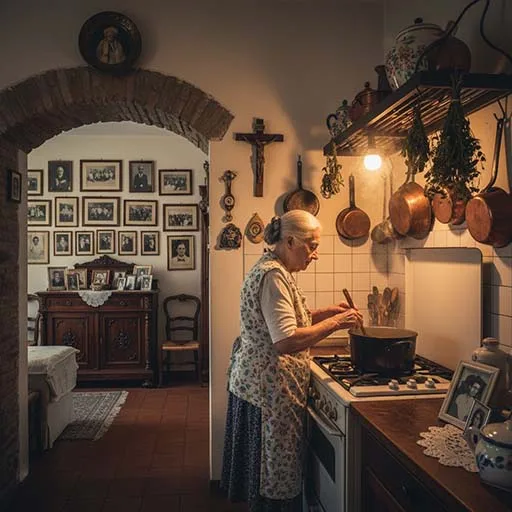
In the doorway stood the grandmother herself, flour on her hands, stirring a pot while greeting the newcomer with a wide smile. She personified Italian food and memory, carrying decades of practice in every movement.
In the living room, shelves were lined with family photos and archives: wedding portraits, school pictures, faded images of relatives standing in fields or in front of ships. On one wall, a framed family coat of arms hinted at older stories about the family’s name and history.
On a side table, a box of handwritten family recipes rested under a stack of cookbooks. It would later become clear that this box held as many memories as any album or certificate. Together, these details hinted at the depth of family names and identity before a single story was told.
Inside the Home – Food, Warmth, and Kitchen Table Conversations
“We sat for hours around the table” – the heart of the evening
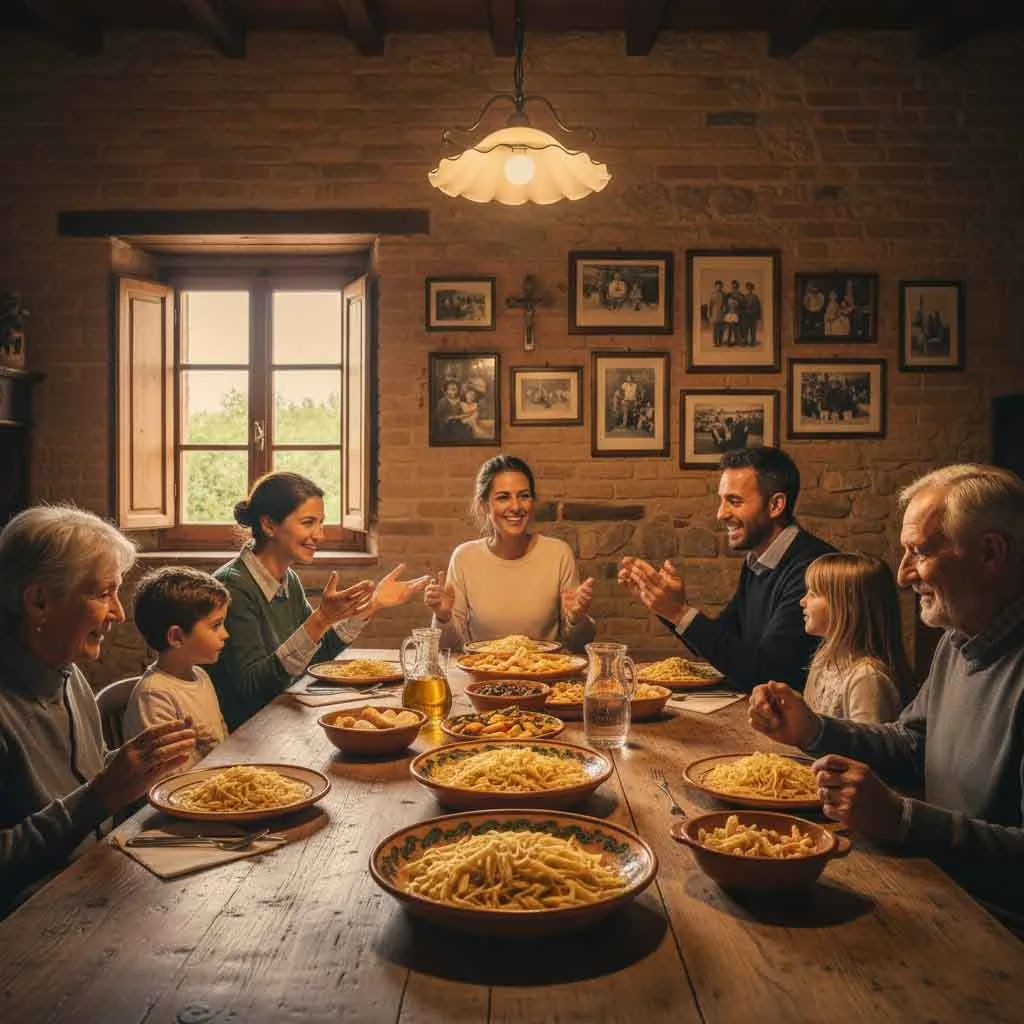
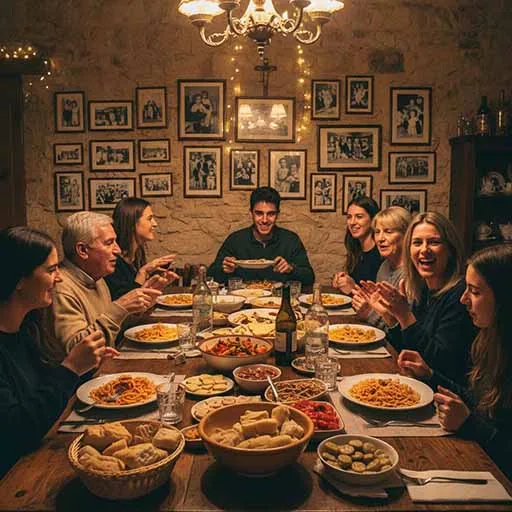
Dinner was served in a bright room off the kitchen. The table was set for many more than just the core family; an extra seat had been added for the traveler without any fuss. Later, the traveler would write that we sat for hours around the table, letting time slide by as naturally as the conversation.
Platters appeared one after another. With each course, someone always refilled my plate, introducing new flavors rooted in the Mediterranean diet—olive oil, tomatoes, homemade bread, and roasted vegetables. Here, nutrition and history were intertwined, making the meal itself part of the family’s ongoing story.
In this house, kitchen table conversations did not just fill silence; they functioned like a living archive, layering daily updates over older tales. The visitor soon understood that the table was where Italian food and memory met, and where intimate travel experiences could unfold for anyone willing to listen more than they spoke.
Stories poured out over coffee and dessert
When the main dishes had been cleared, coffee and a simple dessert appeared. That was when stories poured out over coffee and dessert, moving from light jokes toward richer recollections.
At first, everyone talked at once, laughing, and the visitor struggled to catch every detail. Gradually, the conversation drifted into the past, led by older relatives whose voices carried both authority and kindness. At this stage, the evening became more than chit-chat; it became oral family history unfolding in real time.
As each new memory surfaced, photographs were passed from hand to hand. Someone would point to a face and say, they pointed out relatives in old portraits, explaining where that person had moved, who they had married, or how they had helped during harder years. Through these stories, intergenerational memories shifted from abstract terms into living, breathing moments that could be felt across the table.
Children, elders, and how a multi generational family shares space
Younger children sat near the ends of the table. At first, children listened quietly at first, watching the adults talk and wondering when they might be allowed to join in. Over time, they began to add small details—remembering a joke, mimicking a grandparent’s gesture, or asking questions that pushed the story in new directions.
The older relatives carried more distant memories. As they spoke, their memories stretched back to childhood, describing experiences that pre-dated television, smartphones, and cheap flights.
At one point, they spoke about life before the internet, explaining how letters, radios, and personal visits once kept the village connected. For the traveler, this was listening to elders’ wisdom in its purest form, framed not as lectures but as gentle, funny, and sometimes sobering recollections.
Layered through these stories were descriptions of family rituals and customs: Sunday lunches that turned into all-day gatherings, seasonal blessings from the church, and small gestures like keeping a seat open “just in case” a distant cousin dropped by. Together, these traditions nurtured a shared sense of responsibility for passing down life lessons.
Feeling like part of the family – emotional travel storytelling
Somewhere between the second and third course, the mood shifted. The visitor stopped feeling like an outsider and started to relax. Later, the traveler summarized the feeling in one line: I felt like part of the family.
That feeling did not come from grand gestures or dramatic declarations. It came from small details: a sibling automatically refilling the guest’s glass, an aunt leaning over to translate a joke, people asking follow-up questions about the traveler’s own relatives. When the family finally said we compared traditions from our countries, it was clear the interest went both ways.
In that moment, I realized how similar our families were, the traveler noted afterward. Both cherished stories, worried about the future, and laughed hardest at old misunderstandings.
That shared ground laid the foundation for genuine cross cultural friendships, the kind that form slowly over shared meals and become the highlight of a journey. This is what makes such evenings powerful examples of intimate travel experiences rather than simple hospitality.
Storytelling Across Generations – War, Love, and Migration
Grandparents war stories and the weight of history
As dessert plates were cleared, the tone shifted again. The older generation began to share grandparents war stories, explaining what the village endured during World War II. Out of respect, the room grew quieter during sad memories.
They spoke about hunger, curfews, and nights when families huddled together listening for distant explosions. Sometimes they remembered the sound of church bells echoing from the village bell tower after a dangerous night, signaling that the immediate crisis had passed. In the decades that followed, they saw roads rebuilt, industries revived, and new opportunities created under programs like the Marshall Plan.
Even here, they used humor to soften hard times, turning frightening episodes into family legends that the younger members could handle. The traveler recognized this as another form of storytelling across generations—not hiding hardship, but wrapping it in warmth so its lessons could be carried forward.
Italian diaspora and immigrant family background
At a certain point, the conversation moved from local struggles to journeys abroad. Many families in this region have ties to the Italian diaspora, and this one was no different. The elders spoke about cousins who left the village decades earlier, boarding ships listed on an immigration ship manifest and eventually passing through Ellis Island in search of work.
These accounts revealed layers of immigrant family background, describing letters that took weeks to arrive, photos that felt like small miracles, and occasional visits home that seemed to compress years into a few weeks. The family compared the pace of those journeys with the speed of modern flights, often shaking their heads at how fast things move now.
For the traveler listening at the table, this part of the evening became a live lesson in discovering hidden family histories and learning about ancestors who had crossed oceans. The discussion made it clear that migration was not just a statistic; it was a series of decisions made by ordinary people trying to protect their families.
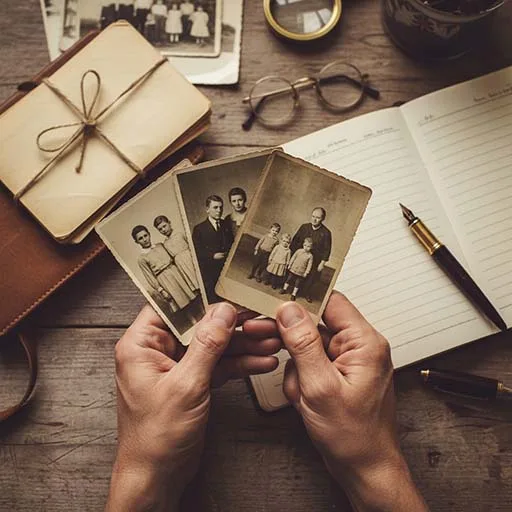
Photographs, archives, and preserving family stories
When talk turned to relatives abroad, more photos came out. Once again, photographs were passed from hand to hand, each picture prompting gasps, laughter, or silence. Here, they pointed out relatives in old portraits, recounting who they married, what they did for work, and which descendants still wrote back.
The traveler, still trying to keep up, quietly noted down details. In their notebook, the line I recorded notes in my travel journal would later sit underlined, marking the moment when listening transformed into documentation.
The visitor recognized that this was how preserving family stories often begins: not with perfect audio equipment or formal interviews, but with scribbled details captured while the voices are still in the room.
These stories, combined with the family’s family photos and archives, created a web of intergenerational memories that connected past, present, and future. They also highlighted just how much can be lost when no one writes anything down.
Names, dialects, and the sound of identity
As the stories flowed, one detail stood out: the rhythm of language itself. At times, grandma switched between dialect and Italian, mixing standard phrases with the particular sounds of local speech. This was a living demonstration of regional Italian dialects, carrying centuries of meaning in intonation and vocabulary.
For this family, these dialects were not just curiosities; they were part of family names and identity, encoding who belonged where and who came from which neighborhood or valley. The accents and phrases created invisible lines between relatives who stayed and those who left.
Later, relatives mentioned cousins who had used an ancestry DNA test and dug into Italian census records and entries from the parish baptism register to cross-check dates and names. These official documents, combined with the melody of spoken stories, gave the family a double-layered way to remember who they were.
Names, Roots, and Hidden Histories in the Gessolini Line
Family names and identity – what a surname carries
The family surname came up many times. For them, identity was not just about faces; it was about how a name connected to land, work, and reputation. As relatives joked and teased one another, they also discussed how family names and identity can shape expectations in a village where everyone knows everyone.
On the living-room wall, the framed family coat of arms drew occasional comments. Some family members treated it with pride; others suspected it was more decorative than historically accurate.
Here, local legends and folklore blended with registry entries and parish notes, creating a rich but sometimes confusing—picture of the family’s past. This mix showed how their stories blurred fact and myth in a way that felt honest and human.
Discovering hidden family histories through records
Later in the evening, one uncle described how older relatives had once visited the regional archive office and the Palazzo comunale to search for older references to the surname. Staff there guided them through dusty shelves and database screens, helping them trace the family from one generation to the next using Italian census records and the parish baptism register.
Relatives abroad, especially those in countries shaped by the Italian diaspora, had followed similar paths. Some had relied on digital scans of the immigration ship manifest lists and arrival records, while others turned to local genealogical societies. Adding details from an ancestry DNA test allowed them to connect with far-flung cousins they had never met. Together, these efforts illustrated practical ways of discovering hidden family histories, even when starting from a different continent.
Handwritten family recipes as a living archive
Among all these official records, the box of handwritten family recipes remained a humble but powerful archive. The traveler noticed that people spoke about certain dishes with the same affection they used when talking about beloved relatives. In a very real sense, food was the delicious edge of Italian food and memory.
Relatives described how recipes had traveled with those who emigrated, tucked into suitcases alongside photographs and small keepsakes during the immigration ship manifest era. In new countries, those dishes helped transplanted families feel anchored, even when everything else felt unfamiliar. Over time, these recipes played a crucial part in finding home away from home and strengthening connections between branches of the same clan.
Everyday Life in Italy – Rituals, Seasons, and the Village Church
Everyday life in Italy through the family routine
To fully understand the evening, it helps to see it against the background of daily life. Relatives described everyday life in Italy as a rhythm of school, work, and evening strolls. Some worked in nearby towns; others stayed in the village, running shops or helping on family land.
In winter, they described winters in the mountains, referencing the chill that settled over the Apennine Mountains, frozen pipes, and evenings spent around shared fireplaces. Those long nights often turned into natural opportunities for more stories, more card games, and more subtle reinforcement of the family bond.
Family rituals and customs through the year
Throughout the year, different events punctuated the calendar. Summers brought outdoor dinners, music in the Piazza, and preparations for Ferragosto. In January, La Befana delighted younger family members, while grown-ups used the holiday as another excuse to gather and eat.
The olive harvest festival and vendemmia grape harvest demanded real work but also delivered a sense of pride and togetherness. The communal bread oven still saw use during special occasions, connecting present generations to routines their ancestors knew well. These seasonal habits, combined with weekly Sunday family gatherings, created a strong sense of continuity for younger members, reinforcing family rituals and customs in a natural way.
Church bells, toasts, and remembering absent relatives
At one point in the conversation, someone raised a glass and said that we toasted to absent relatives, whose photos smiled from the shelves. The traveler saw how this simple act connected people scattered around the world, including cousins in the United States and other parts of the Italian diaspora.
As elders reminisced, they remembered the sound of church bells at key life events—marriages, funerals, and baptisms. The bells from the village bell tower formed a soundtrack to their lives, closely linked to the rituals of the village church community and the broader Roman Catholic Church. Through these details, the visitor understood how deeply family identity and roots were tied not just to bloodlines, but also to place, sound, and habit.
Cross-Cultural Conversations – Comparing Families and Countries
“We compared traditions from our countries”
At various points in the night, the spotlight shifted from the family’s story to the visitor’s. True to the phrase, we compared traditions from our countries. The family wanted to know about holidays, school life, and work culture in the traveler’s homeland, including how Americans think about ancestry and roots.
During these exchanges, they asked about my own family history, curious about grandparents, migrations, and which stories survived in that household. These questions turned the evening into a genuine cultural exchange with hosts, not a one-way lecture.
They reinforced the idea that cross cultural friendships grow not just from hospitality, but from a balanced curiosity about one another’s lives.
Life before the internet and how the village has changed
Older relatives reflected on how the village used to be, compared with today. At one point, they spoke about life before the internet, when news arrived through letters, television, and gossip in the Piazza. These stories highlighted the contrast between the slower pace of earlier decades and the current era of smartphones and instant messaging.
Younger family members chimed in about tourism and new opportunities. Together, they shared how the village has changed, describing young adults moving to cities, new businesses opening, and a few foreign families settling in.
Train schedules on the Italian railway network made commuting easier, but they also meant that people spent more time outside the village. For the traveler, these reflections demonstrated how the conversation drifted into the past and moved back into the present over and over again, offering a multi-layered view of the community.
Friendship, belonging, and invitations to return
By the end of the evening, the visitor was not just a guest but a friend. Every small gesture reinforced how their hospitality felt effortless—from translating jokes to packing leftovers for the traveler to take back to their room.
Before the night ended, several relatives made sure they insisted I come back one day, outlining future festivals and suggesting the “best” seasons to return. In their journal, the traveler later wrote that this night had become a powerful example of sense of belonging abroad, showing how a person can be fully foreign on paper but still feel deeply included.
For anyone who has ever longed for connection while traveling, this evening shows how a stranger can unexpectedly start finding home away from home in a place they had never heard of before stepping onto that train.
Scenes and Moments Not to Forget
Around the table – micro-moments of connection
Certain moments remained etched in the traveler’s memory. They remembered how a neighbor dropped by unannounced halfway through dinner, stepping into the kitchen as if it were their own. Without hesitation, an extra plate appeared, and the conversation simply grew louder.
They also recalled the image of forks frozen mid-air as everyone talked at once, laughing, trying to outdo each other’s jokes. Even small pauses showed something: the way someone always refilled my plate without asking, or the way hands automatically reached out when photographs were passed from hand to hand. In this house, gestures communicated as much warmth as words.
Night in the village – the evening deepens
As the night stretched on, we stayed up later than planned, long after the bells signaled the typical bedtime for many villagers. Outside, the village bell tower marked the hours, but inside, no one seemed in a hurry.
The traveler watched as their memories stretched back to childhood, with elders recalling games played in alleys, first crushes, and market days from decades past. Often, their stories blurred fact and myth, weaving local legends and folklore into events that could still be checked in old records.
When the traveler finally stepped back into the cool night air, they knew that their stories stayed with me afterward. The evening had become a mental landmark as significant as any cathedral or monument visited on the same journey.
How the visit changed how ancestry is seen
The next day, the traveler looked at their family research differently. The line the visit changed how I see ancestry kept coming back to them. Until that night, ancestry had been a matter of documents, charts, and maybe DNA results. Now it felt inseparable from laughter, recipes, faith, and shared silence.
They realized that learning about ancestors requires both sides: the factual clarity of archives and the messy, emotional richness of lived stories. This insight turned a single evening into a lasting example of how preserving family stories can shape both personal identity and wider understanding.
Preserving Family Stories – Lessons for Any Reader
Why preserving family stories matters
For anyone whether in Italy, America, or elsewhere this family’s example underlines why preserving family stories is more than a nostalgic hobby. Stories can anchor a person during difficult times, provide context for major life decisions, and keep connections alive even when relatives live continents apart.
In this household, storytelling functioned almost like a quiet insurance policy against forgetting. Oral family history, carefully tended, ensured that younger generations would know not just names and dates, but emotions, mistakes, and victories.
In this way, families everywhere can strengthen resilience by listening to elders’ wisdom and treating their experiences as guides rather than relics.
Practical steps to start your own family history project
The traveler’s night with the family also offered concrete ideas for readers who want to start similar projects. One simple step is to do what the visitor did: keep a notebook handy.
Writing down details so that the sentence I recorded notes in my travel journal becomes true in your own life can preserve information that might otherwise fade.
Collecting old photos is another step. By scanning images and building your own family photos and archives, you create a digital backup of fragile prints. Visiting local institutions like a local history museum, town offices, or a regional archive office can open access to older records.
Using archives and tools without losing the human side
For those with Italian roots—or roots in any place that keeps detailed records—official sources like Italian census records and the parish baptism register can be invaluable. Databases that compile immigration ship manifest entries can show when ancestors arrived and where they landed. Modern tools, including an ancestry DNA test, can highlight links you might not have suspected, especially where the Italian diaspora has scattered families widely.
Yet the evening with the family makes one thing clear: these tools should support, not replace, shared meals and conversations. Data alone cannot capture how it feels when we toasted to absent relatives, or when laughter erupts during a story. The richest family histories grow where archives meet everyday conversations at the kitchen table.
Travel as a catalyst for family connection
Finally, this story highlights how travel itself can inspire new connections. By being open, patient, and respectful, travelers can find themselves in situations where meeting locals while traveling turns into genuine relationships. When those interactions lead to personal connection to strangers, both sides can walk away with fresh perspectives on their own roots.
These encounters become powerful forms of emotional travel storytelling that leave lasting impressions. For readers, the invitation is clear: seek out chances for cultural exchange with hosts, accept genuine invitations, and remain curious. Somewhere along the way, you might also discover your own version of finding home away from home.
FAQs – Visiting Italian Families & Tracing Roots in Italy
FAQ 1 – How can a traveler respectfully connect with local families in places like Emilia-Romagna?
A respectful approach starts small. Travelers can spend time in local spaces such as a Trattoria, cafés, markets, and the Piazza, where conversations arise naturally. Learning a few phrases in Italian and showing genuine curiosity about local life can help, but pressure should be avoided.
The family’s story shows that meaningful encounters happen when people allow time for trust to build. Meeting locals while traveling is less about “getting an experience” and more about sharing a moment. If an invitation arises, accept it with gratitude, but don’t push for access to private spaces.
FAQ 2 – Is it common for Italian families to invite strangers into their homes?
Whether a family invites a traveler in depends on personality, region, and circumstance. In some villages, hospitality runs deep; in others, people may be more private. The key is that an invitation should come naturally, as it did here when they invited me into their home through a relative working at the restaurant.
The story also shows that the hospitality of Italian families can be generous but grounded. Guests are welcomed like distant cousins, not like clients. Respecting boundaries, asking before taking photos, and offering heartfelt thanks all help ensure that these meetings are positive for everyone.
FAQ 3 – What should I know about Sunday family gatherings in Italy?
In many Italian communities, Sunday family gatherings are a core tradition. Families may come together after church services to share long lunches that last well into the afternoon. These meals often feature home cooking that reflects Italian food and memory, linking recipes to specific relatives and eras.
Guests at such gatherings can expect multi-course meals, lively conversation, and plenty of joking across generations. These afternoons provide natural spaces for intergenerational memories to surface and for younger relatives to absorb stories without feeling like they are being formally “taught.”
FAQ 4 – How can I start tracing my Italian roots from abroad?
People with Italian ancestry abroad can begin by interviewing relatives and collecting documents at home. After that, they can explore official sources like Italian census records, the parish baptism register, and databases that preserve immigration ship manifest entries.
An ancestry DNA test can complement this work by suggesting possible connections within the Italian diaspora. Reaching out to institutions such as the regional archive office, Palazzo comunale, or a local parish can yield additional information. Combining these resources with stories shared at family gatherings creates a fuller, more accurate picture of the past.
FAQ 5 – What role does the village church community play in Italian family life?
In many towns, the village church community linked to the Roman Catholic Church serves as both a spiritual center and a social hub. Life events—baptisms, weddings, funerals—often revolve around the church. The ringing of the village bell tower marks time and signals events that matter to everyone.
Holidays like Ferragosto and La Befana blend religious tradition with local custom, often culminating in family meals and civic events. Together, these elements reinforce identity and shared values, even among those who may not attend every service.
FAQ 6 – Are Italian villages still very traditional, or are they changing?
Villages are constantly evolving. In the story, elders recall earlier times as they spoke about life before the internet, when news and entertainment arrived more slowly. Younger residents talk about commuting to nearby cities, new businesses, and an influx of visitors.
As one relative explained, they shared how the village has changed in response to tourism, technology, and shifting job markets. Still, many rural Italy traditions endure: seasonal harvests, church celebrations, and community events that bring people together. Tradition and modernity coexist, often around the same kitchen tables.
FAQ 7 – What should I bring if invited into an Italian family’s home?
If a traveler is lucky enough to receive such an invitation, small, thoughtful gifts go a long way. Quality sweets, a good bottle of wine, or something unique from the traveler’s home region are all appreciated. Offering to help set or clear the table demonstrates respect.
Once at the table, gratitude matters more than formality. Saying thank you when someone always refilled my plate shows appreciation for both the food and the care behind it. A few words of praise in Italian can make hosts beam with pride.
FAQ 8 – How can I avoid romanticizing Italy while still enjoying emotional travel storytelling?
Authentic stories balance light and shadow. Instead of idealizing everything, travelers can notice both beauty and struggle—how the room grew quieter during sad memories, for example, or how humor and hardship coexist.
Emotional travel storytelling that honors nuance will resonate more deeply than glossy narratives. By paying attention to work, worries, and everyday routines alongside scenery and cuisine, storytellers can offer richer, more respectful portraits of the places they visit.
FAQ 9 – What are some respectful questions to ask elders about family history?
Good questions are open-ended and gentle. Asking about childhood, important holidays, or the first job can lead to deeper stories. As relatives answer, their memories stretched back to childhood, connecting personal experiences to larger historical events.
Travelers—or younger family members—should be ready to sit patiently as their stories blurred fact and myth. Both elements can be valuable. Recording details (with permission) and checking them later against documents keeps respect and accuracy aligned.
FAQ 10 – How can I turn my own family visit into a high-quality, AdSense-safe blog post?
To create a strong article, writers can follow a structure similar to this one: set the scene, introduce the people, share specific stories, and reflect on what changed afterward. Writing in a clear, conversational tone and focusing on culture, memory, and passing down life lessons keeps the content both engaging and safe for advertisers.
Author Bio:
Written by Lily Silver, a travel and culture writer who loves slow journeys, family stories, and quiet villages off the main tourist map. Published by Ahmed Saeed, who curates thoughtful, ad-friendly content that helps readers connect more deeply with places and people.