Disclaimer: This article shares one homeowner’s experience with older building materials and renovation dust. It is not medical or legal advice. Always consult qualified health, safety, and environmental professionals before starting or continuing any home project.
When the inspection report came back, one strange word was circled in red: Asbestlint. The homeowner in this story (let’s call them Alex) had lived in older properties before and always joked about asbestos fibers in old houses, but this time the joke stopped being funny.
The report hinted at hidden carcinogens in building dust, and suddenly all those weekend projects didn’t feel harmless anymore.
Later, in a notebook, Alex wrote the phrase “what I did first when I realized my home might be unsafe” to capture that moment of panic and action. It started with Googling home renovation health risks, then quietly closing doors to keep dust away from the kids’ room.
It looked like an ordinary DIY situation on the surface, but underneath were layers of aging materials, old repairs, and decades of unknown history in the walls and ceilings.
This article follows Alex’s journey in a friendly, practical way so other homeowners can learn from it. It’s not medical advice or a technical manual, but a detailed, real-world path through fear, confusion, experts, reports, and, eventually, a simple, sustainable safety routine at home.
The Day They Realized the Home Might Be Unsafe
That One Renovation Weekend That Changed Everything
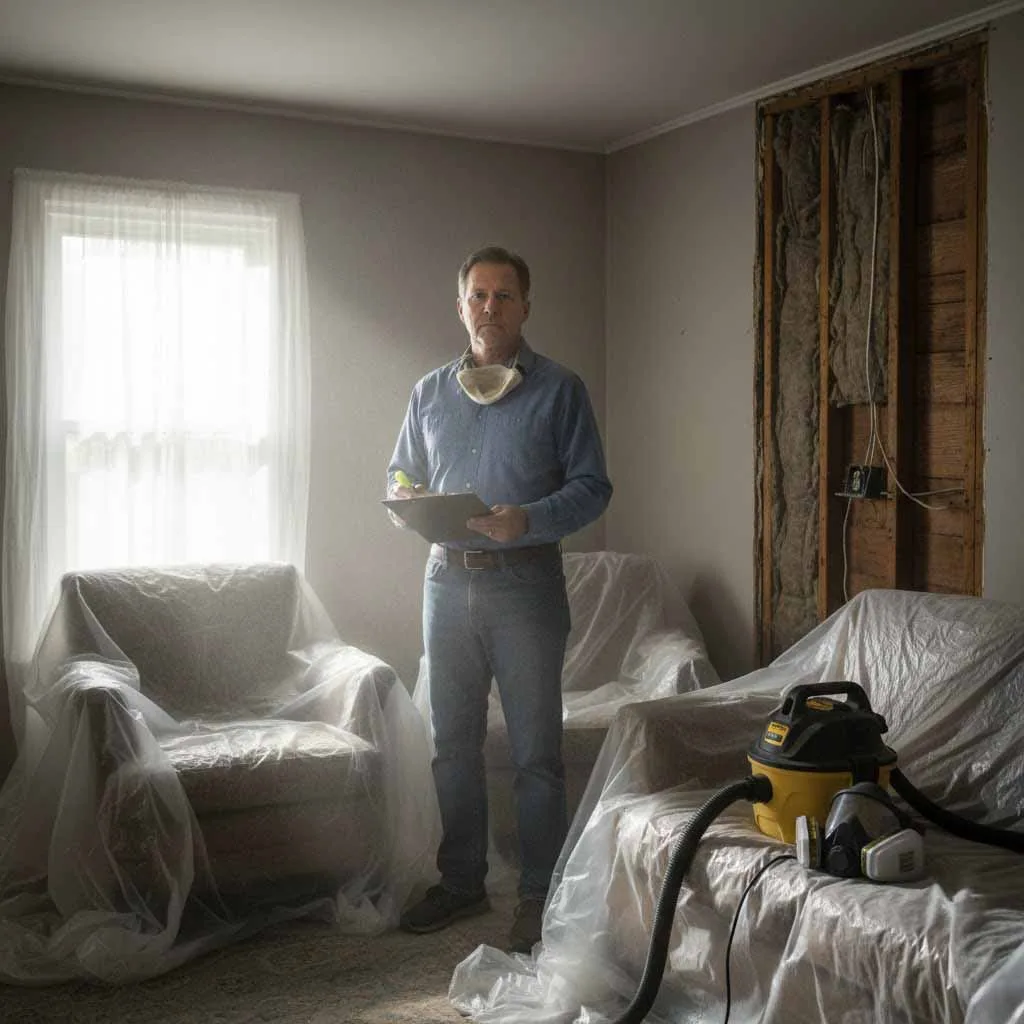
One weekend, Alex decided to open up a small section of wall in a pre-1980 house to add some wiring. After a few holes and some sanding, the room filled with a fine gray cloud. At first, it just seemed like messy DIY. But then the itch started:
Had this dust been there for decades? Could it be tied to contaminated household dust risks, or worse?
As the light from the window caught particles floating in the air, Alex imagined microscopic fibers in household air drifting into bedrooms and settling into vents.
The age of the building meant real contamination risks in pre-1980 homes, and the thought alone made breathing feel heavier. Over the next few days, how my breathing and anxiety changed during the process became a quiet, but constant, concern that pushed Alex to look for answers instead of just sweeping up and moving on.
First Red Flags in an Older House
Looking back, Alex could see early clues that something was off. There were patched areas in the hallway, odd stains along baseboards, and places where paint seemed thicker, as if trying to mask legacy construction hazards in walls. In the basement, strange fibrous padding hinted at dangerous insulation materials at home.
They began reading about how to tell if renovation dust is something to worry about. Simple clues like gray, fluffy debris around pipes, cracked tiles, or crumbling ceiling textures were suddenly ominous.
A few small red flags that made me pause a renovation project kept stacking up: brittle tiles that snapped instead of flexing, old adhesive that looked tar-like, and disconnected ducts filled with lint and grit.
These signs didn’t prove anything on their own, but they painted a picture: this wasn’t just a cosmetic remodel; it was a health question.
When DIY Confidence Turned Into Health Panic
Until that point, Alex thought of DIY as a harmless hobby. But one late night, a thread about lung disease from home repair projects caught their eye, and the panic really started. Stories of residential exposure to building toxins made Alex wonder what had already been inhaled. Articles described the long-term health impact of renovation dust, especially when it involved older materials, and the sleepless scrolling began.
In search of reliable information, Alex turned to official sources. What I learned from reading official home safety guidelines from federal and state agencies completely changed the approach: it wasn’t about never renovating, but about understanding the risk and planning smarter. That shift—from fear to informed caution—was the first real turning point.
Understanding Asbestlint and Legacy Home Construction Risks
What the Inspection Note Really Meant
At the next inspection, the professional pointed to “lint-like fibers” captured from a ceiling void. It looked innocent, but the report described hazardous mineral fibers in drywall and insulation as possible contributors. The term Asbestlint became shorthand for suspicious, fluffy particles tangled in old materials that no one had disturbed for years.
The inspector was clear: the goal wasn’t to diagnose disease on the spot. Instead, they urged tests and a cautious approach. The homeowner’s story here is not scientific or clinical; it’s a real-life experience told in plain language, meant to help others ask better questions and understand when expert help is needed.
Common Hidden Hazards in Older Houses
As Alex dug deeper, certain hotspots kept appearing in guides and reports. In many cases, asbestos fibers in old houses were most likely around thermal pipe insulation on boiler systems, brittle cement siding boards on mid-century houses, and layers under vinyl floor tile backing in older homes.
Learning to spot common signs of hazardous building materials became a small obsession. Oddly textured wallboard, hairline cracks in old tiles, and seams in siding panels that didn’t match modern patterns all earned a closer look.
The worst surprise came from reading about popcorn ceiling texture products from the 1970s. Alex remembered sanding a small patch years earlier and scribbled down things I wish I knew before sanding that ceiling texture as a reminder that what looks like decorative fluff can carry real risk.
The Science They Tried to Understand (Without a Degree)
Alex quickly ran into technical terms: chrysotile mineral fiber, amosite mineral fiber, and crocidolite mineral fiber. The names sounded like something from a geology class, but they represented different forms of fibers once used in building products. Instead of trying to become an instant expert, Alex focused on learning enough to ask informed questions.
Trusted organizations such as the World Health Organization (WHO), Centers for Disease Control and Prevention (CDC), National Institute for Occupational Safety and Health (NIOSH), the American Lung Association, and the American Thoracic Society offered balanced information on exposure and health.
That’s where how I decided which online advice to trust and which to ignore really came into play: official sites and peer-reviewed facts first, anonymous comment threads last.
Their First Response: Stop, Contain, and Breathe
Hitting Pause on All DIY Work
At a certain point, the dust and second-guessing became too much. Alex distinctly remembers the moment I decided to stop DIY and call a specialist instead of continuing to poke holes and scrape surfaces.
Before anyone touched the walls again, there was a quick risk assessment before tearing out walls, especially where friable insulation safety concerns were possible. Crumbling materials, strange fuzz around pipes, and chalky joint compounds told a bigger story. Combined with mild throat irritation, these were warning signs that made me leave the house temporarily while next steps were planned.
Immediate Containment Measures
Even before any official testing, Alex tried to limit exposure. Doors were shut, vents were covered, and fans were switched off to support basic dust control during demolition work, even though the “demolition” was just a couple of exploratory cuts.
With limited knowledge, Alex taped up doorways and used plastic drop cloths as makeshift plastic sheeting containment barriers. It wasn’t perfect, but it was better than nothing until professionals could set up a proper negative air pressure containment system. In the meantime, they started creating a clean-up plan after dusty work, focusing on damp wiping instead of sweeping, and isolating work clothes from family laundry.
First Conversations With Health Professionals
The next important step was making an appointment with a physician. During the conversation I had with my doctor about long-term risk, Alex described the dust events honestly, without downplaying them. The doctor recommended routine monitoring and tests appropriate for the situation.
From there, how I weighed test results against my own symptoms became an ongoing process. Normal scans offered relief, but any cough or tightness still triggered worry.
The physician also mentioned the local poison control center hotline as a resource for acute concerns, especially if children were involved. Together, they sketched out health monitoring after home contamination that was realistic rather than panic-driven.
Calling in Experts: Inspectors, Labs, and Official Guidelines
Getting a Professional Inspection Instead of Guessing
Rather than trusting internet photos, Alex contacted the local building inspection department and asked for guidance. This led to a referral to a licensed abatement contractor and an indoor environmental quality consultant who specialized in older buildings.
When picking up the phone, Alex rehearsed the exact words I used when calling a licensed inspector, describing the age of the home, the dust event, and specific locations of concern.
That clarity helped the expert understand the urgency. During the visit, Alex kept a list of questions I asked the inspector before we started any work, focusing on testing suspicious ceiling panels and options for professional inspection for home toxins in key rooms.
Sampling, Testing, and Reports
After the walkthrough, the consultant prepared a pre-renovation hazard assessment report. It outlined areas that needed caution, materials to sample, and recommended containment methods for future work.
Samples were sent to a home air quality testing laboratory, which measured indoor air quality during remodeling and afterward. The lab focused on particles and fibers commonly linked to older construction.
Meanwhile, Alex organized a binder with all documents—photos of suspect areas, receipts, emails, and landlord-tenant safety disclosure forms. That’s how how I documented everything in case I needed proof later turned into a simple habit: scan, label, and file.
Reading and Applying Official Safety Guidance
Guidance from the Environmental Protection Agency (EPA) and Occupational Safety and Health Administration (OSHA) helped Alex understand home renovation health risks without guessing. These documents explained acceptable practices, worker protections, and homeowner responsibilities.
One key concept was respiratory protection standards EN 149, which clarified how masks are tested for filtration. It reinforced the idea that dust masks from a paint aisle aren’t the same as certified respiratory protection.
All of this fed into what a realistic home safety plan looks like for older houses: assume some materials might be risky, test when in doubt, and plan projects with containment and protective gear from day one.
Protecting Themselves During the Mess: Gear, Zones, and Habits

Protective Gear That Actually Helped
Based on expert recommendations, Alex began using an N95 filtering facepiece respirator for light tasks and upgraded to a P100 reusable half-face respirator when work involved cutting or sanding near suspect materials. This matched best practices for respiratory protection for home projects without pretending to be industrial-grade cleanup.
On days when dusty tasks were unavoidable, Alex also wore disposable Tyvek protective coveralls, gloves, and goggles. This was part of the broader protective gear for DIY demolition approach, even though heavy removal work was left to professionals.
Creating “Safe” and “Restricted” Zones at Home
To protect the rest of the family, Alex carefully set up circulation patterns and room boundaries. The attic and workroom were marked as “restricted,” while bedrooms stayed sealed and dust-free. That’s how I organized rooms into safe and restricted zones, taping thresholds and keeping tools out of clean spaces.
Aside from plastic barriers, practical steps I took to reduce dust spreading through the house included wiping shoes on damp cloths, carrying debris in sealed bags, and assigning a separate entry route for tools. This is also how I kept pets and kids out of the danger zone at home, a big part of safeguarding kids from renovation hazards in a small space.
Daily Routines That Reduced Stress
Over time, safety became routine instead of a constant emergency. Alex developed simple daily habits I added to feel safer at home, such as quick surface wipes, nightly floor checks in work areas, and washing work clothes separately.
It didn’t take long to understand why I stopped using regular household vacuums on fine dust. Standard machines often recirculate tiny particles. That’s why Alex invested in a HEPA-certified vacuum cleaner, which is better suited to capture fine debris associated with cleaning methods for toxic household dust. Regular visual checks and wipe tests were how I checked that the cleanup was actually finished after any project day.
Working With Contractors and Landlords Without Losing Their Mind
Communicating Risk Without Sounding “Crazy”
At first, Alex struggled with how I dealt with family members who thought I was overreacting. It’s easy to seem alarmist when talking about tiny fibers no one can see. Over time, though, Alex learned simple language I used to explain the risk to children and adults alike: short, concrete explanations about invisible dust and long-term health, not horror stories.
This communication skill also improved risk communication with contractors. Instead of demanding vague “safety,” Alex asked specific questions about containment, masks, and ventilation tied to safer renovation planning for families, making the conversation more practical and less emotional.
Holding Pros Accountable
Hiring professionals doesn’t remove all responsibility. Alex practiced ways I kept my landlord or contractor accountable for safety by asking for written procedures, proof of training, and photos of containment before and after work.
Contracts referenced local regulations and echoed what was in the landlord-tenant safety disclosure forms.
Alex also made sure safe disposal of contaminated debris was included in the scope of work, with clear statements about using approved disposal facilities. Over time, what I looked for in a qualified abatement company boiled down to three things: credentials, references, and transparent communication.
Budget vs. Health: Tough Choices
Money matters in real life, and Alex had to decide how much could reasonably be spent. Through this process, how I balanced budget, fear, and actual health data became a recurring theme. Some projects were delayed; others were scaled down to reduce exposure.
Online, there was no shortage of extreme opinions. But how I decided which online advice to trust and which to ignore often came down to whether it aligned with guidance from EPA, OSHA, WHO and similar organizations.
These decisions inform what I now tell friends before they start tearing out old walls: slow down, get an assessment, and plan for safety as part of the budget, not an optional add-on.
Professional Remediation: What Really Happens During Cleanup

Seeing a Full Containment Setup for the First Time
When the professional crew arrived, the house transformed. Doorways were sealed with heavy plastic, machines hummed, and warning tape marked work areas. It was Alex’s first real look at a negative air pressure containment system, complete with sturdy plastic sheeting containment barriers and workers in disposable Tyvek protective coveralls.
Their methods for dust control during demolition work were far more systematic: controlled cuts, dedicated waste paths, and continuous air filtration. Watching them work showed why experts insist on creating a clean-up plan after dusty work long before the first tool is switched on.
How the Crew Dealt With Suspicious Materials
The remediation plan focused on specific problem areas. Crews handled vermiculite attic insulation brand types, removed or encapsulated popcorn ceiling texture products from the 1970s, and stabilized thermal pipe insulation on boiler systems without exposing the rest of the house.
They followed strict guidelines for safe handling of old insulation and identifying suspicious insulation materials that needed testing or special treatment. Once packaged, materials were taken away under rules that ensured safe disposal of contaminated debris, all documented for regulatory compliance.
Clearance, Testing, and Moving Back In
After the heavy work, inspectors returned to confirm that indoor air quality during remodeling had returned to acceptable levels. Lab analysis helped with differentiating harmless vs toxic dust, based on measured content rather than guesswork.
Alex only moved furniture and family back into the most affected areas when satisfied that how I checked that the cleanup was actually finished matched both professional standards and personal comfort. This final check marked the end of the most stressful phase of the journey.
Life After Exposure: Health Monitoring and Mental Recovery
Following Up With Doctors and Specialists
Post-remediation, health monitoring after home contamination continued with scheduled checkups. The medical team, informed by Alex’s notes and photos, could piece together a realistic risk profile.
Here, the mistakes I made in my first attempt at cleaning hazardous dust—like dry sweeping or using the wrong vacuum—were important to share honestly. Resources from the American Lung Association and the American Thoracic Society helped Alex prepare questions for follow-up visits and understand which symptoms warranted attention.

Anxiety, Sleep, and Living With Uncertainty
Even after tests came back reassuring, the mind needed more time to catch up. This is where how my breathing and anxiety changed during the process remained part of the story. Nighttime worries gave way, slowly, to calmer routines and more trust in the systems now in place.
Looking back, how this experience permanently changed my approach to home projects is clear: no more impulsive demolition, more planning, and professional help earlier in the process. Once again, what I learned from reading official home safety guidelines shifted from theory to daily practice.
Emergency Planning Going Forward
Today, Alex keeps a short, written checklist of emergency steps after accidental exposure: stop work immediately, seal the area, open windows only where safe, call experts, and contact the local poison control center hotline if there’s an urgent concern involving kids or pets.
A digital folder contains inspection reports, lab results, photos, and contact details. It’s the organized version of how I documented everything in case I needed proof later—useful for future buyers, insurers, or just peace of mind.
A Practical Safety Framework for Older Homes
Simple Checks Before Anyone Drills, Sands, or Tears Out
Before any new project, Alex does simple checks you can do before drilling into old walls: look for unusual textures, suspect tiles, or patched areas. These are weighed against known risks of drilling into old walls in older structures.
Each project begins with a brief risk assessment before tearing out walls, paying attention to common signs of hazardous building materials like brittle panels, old mastic, or odd-colored insulation. The goal is how to make an older house safer step by step, not to freeze in fear.
Planning Safer Projects Step-by-Step
Alex now treats safety planning like any other part of the job. A basic five-step workflow for safer renovation planning for families might include: checking materials, consulting experts, setting up containment, scheduling work when kids can be elsewhere, and creating a clean-up plan after dusty work in advance.
Instead of rushing everything into one marathon weekend, long-term projects are broken into smaller, manageable tasks. Over months and years, this approach steadily reduces exposure and risk.
Cleaning and Maintenance Habits That Stick
Modernizing routines around cleaning methods for toxic household dust was just as important as remediation. Wet mopping, HEPA-level filtration, and regular filter changes now replace the old habits that stirred dust back into the air.
Again, there’s a reason why I stopped using regular household vacuums on fine dust: they simply weren’t designed for it. Paired with a HEPA-certified vacuum cleaner, simple daily habits I added to feel safer at home—like targeted wipe-downs and careful laundry practices—keep the home cleaner, quieter, and less stressful.
Quick Reference: Gear, Tools, and Documents They Keep Ready
Personal Protection and Tools
In a small cabinet near the work area, Alex keeps a basic kit: an N95 filtering facepiece respirator, a P100 reusable half-face respirator, disposable Tyvek protective coveralls, nitrile gloves, tape, and plastic sheeting.
This setup helps decide protective gear for DIY demolition thresholds: if a job seems dusty enough to need all of this, it’s often a sign to pause and consider whether professionals should take over.
Contacts and Paper Trail
On the fridge and in a phone contact group sits a short list: a trusted licensed abatement contractor, an indoor environmental quality consultant, the state health department toxic substances unit, the local building inspection department, and the local poison control center hotline.
In cloud storage, Alex keeps the pre-renovation hazard assessment report, lab analysis, and landlord-tenant safety disclosure forms. Having everything accessible makes it easier to respond quickly if new projects or issues arise.
Who the Homeowner Is, What They’re Not, and Why Pros Matter
Their Background and Limitations
Alex is not a scientist, doctor, or industrial hygienist—just a careful homeowner who once underestimated older buildings and is now trying to prevent others from doing the same. The story here explains what I did first when I realized my home might be unsafe, but it’s not a substitute for medical or legal advice.
Serious decisions should be guided by professionals and organizations like the World Health Organization (WHO), CDC, and NIOSH, whose research and standards underpin the recommendations discussed throughout this guide.
How This Guide Was Built
This article blends lived experience with official information. Over time, how I balanced budget, fear, and actual health data became the filter for every choice: test results and expert opinions first, social media opinions second.
To keep things grounded, Alex cross-checked details with publications from the Environmental Protection Agency (EPA) and Occupational Safety and Health Administration (OSHA). Combined with on-site observations from an indoor environmental quality consultant, this approach creates a more reliable, practical roadmap.
When You Should Definitely Call a Professional
Some situations are too risky for trial and error. Clear triggers for emergency steps after accidental exposure include visible crumbling insulation, unexpected dust clouds from old materials, and unexplained symptoms after work. In these cases, stopping immediately and calling in experts is crucial.
Whenever questions about air quality arise, a home air quality testing laboratory and the state health department toxic substances unit are far better equipped to advise than any single article could be.
FAQs: Asbestlint Home Safety
FAQ 1 – Is it safe to live in an older US or EU home if there’s suspicious dust?
Older buildings aren’t automatically dangerous, but contamination risks in pre-1980 homes are higher when certain materials are disturbed. The safest approach is to assume nothing based on looks alone. Seek testing and rely on differentiating harmless vs toxic dust through lab analysis. For structural questions, contact your local building inspection department and consult resources from the EPA and WHO designed for homeowners.
FAQ 2 – What should someone do immediately after creating a lot of dust in an old house?
Stop work, leave the area, and avoid sweeping or vacuuming until you know what you’re dealing with. The best emergency steps after accidental exposure include sealing the room, gently ventilating if advised, and contacting professionals. Focus on dust control during demolition work for future projects, and always create a clean-up plan after dusty work before starting.
FAQ 3 – Which mask is better for renovation dust: N95 or P100?
For many small jobs, an N95 filtering facepiece respirator—when worn correctly—may be adequate, but certain situations call for a P100 reusable half-face respirator with appropriate filters. Both are evaluated under respiratory protection standards EN 149 or similar regulations. For specific risks and materials, ask an industrial hygienist or abatement professional.
FAQ 4 – How can someone find a trustworthy abatement company nearby?
Start with your local or state agencies and look for a licensed abatement contractor with verifiable credentials. Ask what I looked for in a qualified abatement company: licensing, references, written plans, and transparent pricing. Confirm that they’re recognized by the state health department toxic substances unit or equivalent body.
FAQ 5 – Can suspicious dust be vacuumed with a regular household vacuum cleaner?
Most standard machines aren’t designed to capture very fine particles safely, and may blow them back into the air. That’s the core of why I stopped using regular household vacuums on fine dust. For suspect debris, only use equipment comparable to a HEPA-certified vacuum cleaner, and follow professional guidance for safe cleanup and disposal.
FAQ 6 – When should someone leave the house during renovation?
If strong odors, heavy dust, or irritation occur—especially in older properties—it may be time to step out. The warning signs that made me leave the house temporarily included visible particles in living spaces and throat irritation. Monitoring indoor air quality during remodeling, plus advice from the American Lung Association or local doctors, can guide decisions for your family.
FAQ 7 – What documents should be kept for future buyers or tenants?
Essential paperwork includes your pre-renovation hazard assessment report, laboratory analyses, and signed landlord-tenant safety disclosure forms. Organized documentation reassures future occupants and can protect you if questions arise later.
FAQ 8 – How can kids and pets be protected during construction in a small apartment?
In tight spaces, safeguarding kids from renovation hazards means keeping them out of work areas entirely. That’s how I kept pets and kids out of the danger zone at home—by using doors, gates, and physical barriers. Combine that with how I organized rooms into safe and restricted zones, managing access and airflow carefully.
FAQ 9 – What questions should be asked before a contractor starts demolition?
Prepare questions I asked the inspector before we started any work and adapt them for contractors: Will materials be tested? How will dust be contained? Will workers wear proper protection? Also discuss risk assessment before tearing out walls and establish clear risk communication with contractors before signing anything.
FAQ 10 – How can someone stay calm while waiting for test results?
Waiting is often the hardest part. It helps to track how my breathing and anxiety changed during the process, then use grounding routines, walks, and supportive conversations. Focus on how I weighed test results against my own symptoms and lean into simple daily habits I added to feel safer at home, like tidying, organizing, and planning next steps with professionals.
Conclusion – How Asbestlint Changed Their Approach to Home Projects
The Biggest Lessons for Future Renovations
From this experience, one clear message emerges: home renovation health risks deserve as much attention as design and budget. Integrating testing, ventilation, and protective gear into planning is a key part of how to make an older house safer over time.
For Alex, every project now begins with safer renovation planning for families, anchored in assessment, consultation, and containment. The balance between improving a home and protecting the people inside it is no longer negotiable.
A Final Word on Safety, Fear, and Realistic Action
In the end, this is not a story about never touching an old house again; it’s about working smarter. Official resources from EPA, OSHA, WHO, CDC, NIOSH, and local agencies provide a solid foundation for decisions. Personal stories, like Alex’s, add emotional context but should always sit alongside professional guidance.
Author Bio:
Written by Silvia Heart, a homeowner who turned a stressful renovation into a practical safety roadmap for other families. Published by Ahmed Saeed, who curates clear, experience-based guides for everyday readers.